
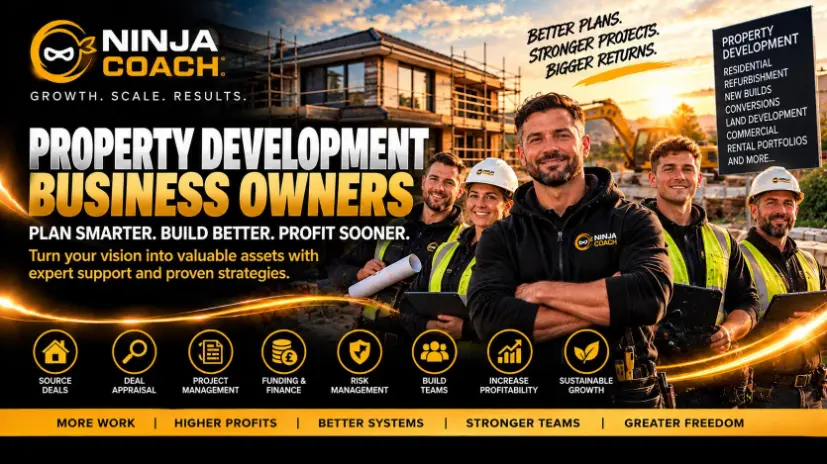
Property Development Businesses: How to Build a Stronger, More Profitable Property Portfolio
Property development can create significant opportunities, whether a business renovates and resells homes, converts buildings, develops land, builds new properties or improves rental and commercial assets. But the sector is capital-intensive and exposed to changing costs, planning decisions, market conditions and delivery risks.
A promising site is only one part of the equation. Developers must assess opportunities carefully, understand the numbers, coordinate professionals and contractors, manage cash flow, control timelines and make informed decisions about risk. A project can look successful on paper while delays, financing costs or unexpected works erode the return.
This article explores how property development businesses can strengthen decision-making, manage projects more effectively and build a sustainable operation rather than relying on individual deals alone.
What Is a Property Development Business?
A property development business identifies opportunities to create, improve, repurpose or increase the value of property. It may acquire land or buildings, obtain necessary permissions, arrange finance, coordinate design and construction, and then sell, lease or retain the completed asset.
Some developers renovate one property at a time; others manage multiple residential projects, commercial schemes, conversions, new builds or portfolios. Property development is not simply buying cheaply and selling for more: results depend on research, realistic appraisals, project management and a clear strategy for what happens when a project is complete.
Which Businesses Operate in the Property Development Sector?
Residential Renovation and Refurbishment
Some developers buy houses or flats that need improvement, carry out refurbishment and sell or rent them. Work may range from cosmetic upgrades to substantial structural changes. Accurate surveys, realistic budgets and clear scope control help avoid turning a planned refurbishment into an open-ended project.
New-Build Housing and Small Residential Schemes
Developers may build individual homes, small groups of houses or larger residential schemes. These projects can require land appraisal, planning, design, infrastructure, contractor procurement, utilities coordination, building control and phased funding. As stakeholders multiply, clear responsibilities and reliable reporting become increasingly important.
Conversions, Extensions and Change of Use
Converting a house into flats, adapting a commercial building or changing a property’s use can create value, but may introduce planning, building regulations, fire safety, access, services and layout considerations. Early professional advice helps identify constraints before substantial money is committed.
Land, Planning and Development Opportunities
Land-led development involves assessing location, access, services, planning prospects, environmental constraints and likely end value. Planning permission is not guaranteed, and the route from acquisition to a deliverable scheme can take time. Appraisals should reflect uncertainty, holding costs and the possibility that a project may need to change.
Commercial Property and Mixed-Use Projects
Some businesses develop or reposition offices, retail premises, industrial units, hospitality assets or mixed-use sites. Demand, tenant requirements, fit-out costs, lease structures and the intended exit strategy all influence commercial viability.
Buy-to-Let, Build-to-Rent and Long-Term Ownership
A developer may sell completed units or retain them for rental income. These routes have different funding, tax, management and cash-flow implications. A rental strategy also requires realistic assumptions about occupancy, maintenance, compliance, management costs and financing.
Start With a Clear Development Strategy
A development business needs to know what types of project it is best placed to deliver. Define target locations, asset types, budget ranges, funding options, acceptable risk and the intended exit route. Clear criteria help the team reject opportunities that do not fit, even when they initially appear attractive.
Without agreed criteria, businesses can become distracted by unrelated projects, stretch resources or commit to work outside their experience. Focus does not remove risk, but it makes decisions more consistent and easier to evaluate.
Assessing a Property Deal Before Committing
A development appraisal should bring together the purchase price, acquisition costs, professional fees, planning and statutory costs, construction budget, finance costs, contingency, holding costs, sales or letting costs and expected income or sale proceeds. Assumptions should be recorded so they can be tested and updated.
The difference between purchase cost and expected sale value is not the same as profit. A realistic appraisal includes the full cost of getting the project from acquisition to completion and exit. Test what happens if costs rise, values fall, rates change or the programme takes longer than planned.
Key Questions Before Proceeding
- Does the opportunity fit the business’s strategy and experience?
- Have title, access, services, site constraints and property condition been investigated?
- Are planning prospects and required permissions understood rather than assumed?
- Are construction costs based on a clear scope and suitable professional input?
- Have finance, fees, contingency, holding costs and exit expenses been included?
- Can the business fund the project if approvals or construction take longer than expected?
- Is there a credible alternative if the preferred exit route becomes unavailable?
Planning, Surveys and Professional Advice
Development projects can depend on planning policy, building regulations, title matters, rights of way, utilities, environmental constraints and technical surveys. Requirements vary by site and proposal. Use appropriately qualified professionals and check the rules that apply to the particular project rather than relying on assumptions.
Early investigation can reveal constraints before they become expensive surprises. A clear record of decisions, approvals, design changes and responsibilities also helps manage risk through the project.
Project Management: Protecting Time, Cost and Quality
Once a project is underway, the developer must coordinate designers, consultants, contractors, suppliers, inspectors, funders and sometimes future purchasers or tenants. Each party needs clear information, agreed responsibilities and timely decisions.
A practical project plan should identify milestones, dependencies, procurement lead times, decision deadlines, budget allowances and accountability. Regular reporting helps leaders identify delays and cost pressures while there is still time to respond. Changes should be documented and assessed for their effect on cost, quality, programme and expected return.
Cash Flow and Funding: The Numbers Behind the Project
Property development can tie up substantial capital before revenue is received. Acquisition, professional fees, deposits, construction payments, interest and holding costs may fall due at different stages. A profitable-looking project can still experience cash-flow pressure if funding is not aligned with the actual payment schedule.
Maintain a live cash-flow forecast, understand funding conditions and allow for timing uncertainty. Sensitivity testing can show how the project performs if costs increase, sales are delayed or the final value is lower than expected. Funding decisions should reflect the project’s circumstances and appropriate professional advice.
Where Property Development Businesses Lose Profit
Profit can be lost through overpaying for an asset, underestimating works, overlooking professional or statutory costs, changing the specification late, poor contractor coordination, delays, defects or an exit strategy that no longer matches market conditions.
For example, a refurbishment may initially appear straightforward. Once work starts, hidden defects, outdated services or design changes add cost and extend the programme. Without contingency or an updated cash-flow forecast, the project can absorb capital needed elsewhere.
A developer may also focus on gross sale value while overlooking finance, holding, selling and management costs. Reviewing the full project economics at each major decision point helps reveal whether original assumptions remain credible.
Build a Repeatable Development Process
A property business becomes more resilient when each project follows a consistent process, from opportunity sourcing and initial appraisal through due diligence, funding, design, procurement, delivery and exit.
- Use a standard opportunity-screening checklist and record why a deal does or does not fit.
- Keep an appraisal model with assumptions clearly labelled and regularly reviewed.
- Set approval points before acquisition, major design commitments and significant budget changes.
- Maintain a risk register with owners, actions and review dates.
- Track budget, committed costs, forecast final cost, programme and cash flow regularly.
- Use written scopes, contracts, responsibilities and change-control procedures.
- Review contractor performance, defects, delays and lessons after each project.
- Separate project-level performance from company overheads and overall cash position.
- Document decisions so knowledge does not sit with one individual.
From Managing Projects to Building a Business
Many development businesses begin with a founder who sources opportunities, negotiates purchases, oversees contractors and manages finance personally. This can work for a small number of projects, but becomes difficult to sustain as the pipeline grows.
Growth often requires clearer roles, delegated decision-making, reliable management information and a team that can deliver without every detail passing through the owner. Leaders need to know which decisions they must retain, which can be delegated and what information is needed to stay in control.
The objective is not bureaucracy for its own sake. It is enough structure for the business to evaluate opportunities consistently, deliver projects reliably and make sound decisions under pressure.
The Overlap Between Property Development and Other Sectors
Property development relies on construction firms, specialist trades, architects, surveyors, engineers, suppliers and project managers. Developers may also work with renewable energy providers to improve building performance or install solar and battery systems.
Home improvement companies can become suppliers or delivery partners on refurbishment projects, while park home and holiday park businesses may have their own development and site-improvement needs. These sectors overlap, but each project should be supported by appropriate expertise and a realistic scope.
Explore related Ninja Coach sector pages: Trades, Construction, Home Improvements and Renewable Energy.
How Ninja Coach Can Help Property Development Business Owners
Property development leaders may need to improve strategy, strengthen financial visibility, develop managers, create repeatable processes or prepare the business to manage a larger pipeline. The priority depends on the business’s size, systems and goals.
More deals do not automatically mean a stronger business. If reporting, funding visibility, project controls or leadership capacity are weak, increasing the pipeline may multiply existing problems. Sometimes the best next step is improving the way current projects are selected and delivered before expanding.
Ninja Coach’s wider business-growth focus includes strategy, sales, leadership, people, systems and commercial performance. Explore Ninja Coach and its Free Business Growth Resources to learn more about business development and operational improvement.
Conclusion: Develop Better Projects by Building a Better Business
Successful property development depends on much more than finding an asset with potential. It requires realistic appraisals, careful due diligence, appropriate professional advice, disciplined project management, cash-flow control and a clear exit strategy.
Whether your business focuses on refurbishments, conversions, new-build homes, land or commercial property, the goal is the same: make informed decisions, manage risk and build a business that can deliver consistently rather than relying on one successful project.
Review your current process, identify where uncertainty or delays create the greatest risk, and build systems that help the whole team make better decisions.
Frequently Asked Questions
What does a property development company do?
A property development company acquires, improves, converts or builds property and then sells, rents or retains the completed asset. Activities can include appraisal, due diligence, planning, design, funding, construction coordination and project exit.
What costs should be included in a property development appraisal?
Depending on the project, costs can include acquisition, legal and professional fees, surveys, planning and statutory costs, construction, utilities, finance, contingency, holding costs, sales expenses and letting or management costs.
Why is cash flow important in property development?
Costs often arise before sale proceeds or rental income are received. A cash-flow forecast helps anticipate funding needs, understand payment timing and assess the impact of delays or cost increases.
What are common property development risks?
Risks can include planning uncertainty, hidden defects, cost inflation, contractor delays, finance changes, market movements, design changes and a slower-than-expected sale or letting process.
Does planning permission guarantee a profitable development?
No. Permission may allow a proposal to proceed, but profitability still depends on acquisition cost, delivery costs, funding, timing, market demand and the exit route. Permissions and conditions should be checked with suitable professionals.
How can a property developer improve project management?
Use clear scopes, realistic programmes, defined responsibilities, regular budget and cash-flow reporting, documented change control and a risk register. Review progress often enough to act before issues become expensive.
Can a small property developer benefit from business coaching?
Potentially. Support may help an owner clarify strategy, strengthen systems, improve decision-making and prepare for growth. The most suitable approach depends on the company’s goals and current challenges.
How can a property development business grow sustainably?
Define the projects the business can deliver well, maintain realistic appraisals and funding plans, build reliable delivery processes and ensure leadership capacity grows alongside the project pipeline.