
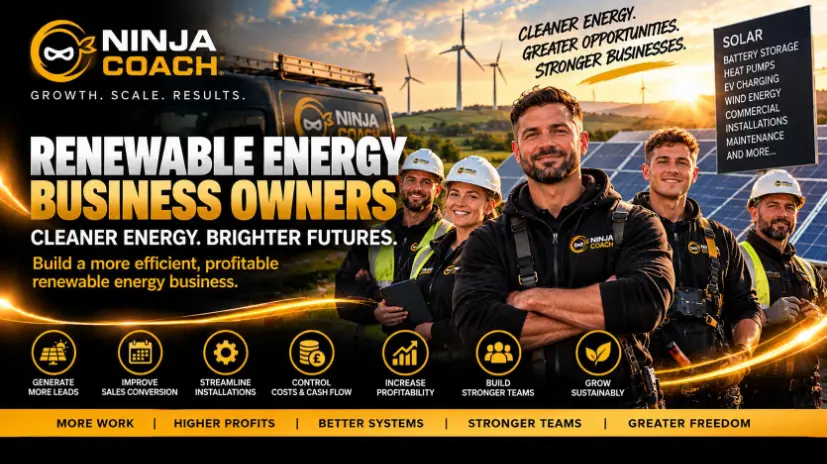
Renewable Energy Businesses: How to Build a Stronger, More Profitable Operation
Renewable Energy Businesses: How to Build a Stronger, More Profitable Operation
Renewable energy is changing how homes and businesses generate, store and use power. Solar photovoltaic (PV) installers, battery-storage specialists, heat-pump businesses, EV-charging installers and wider clean-energy contractors are working in a market shaped by technology, customer demand and changing requirements.
But opportunity alone does not guarantee sustainable growth. Every installation still needs accurate pricing, qualified people, reliable suppliers, safe delivery, clear customer communication and a healthy cash position. As a company grows, scheduling teams, managing stock, maintaining quality and keeping up with product and compliance requirements can become increasingly complex.
The goal is not simply to install more systems. It is to build a company that wins the right work, delivers it consistently, protects its margins and earns customer trust. This article explores the business challenges renewable energy companies face and the systems that can support sustainable growth.
What Is a Renewable Energy Business?
A renewable energy business supplies, installs, maintains or supports technologies that produce or use energy more sustainably. The sector includes domestic and commercial solar PV installers, battery-storage specialists, heat-pump installers, EV-charging installation businesses, renewable-energy developers, electrical contractors, maintenance providers and companies that combine several technologies.
Some businesses work directly with homeowners; others serve landlords, commercial property owners, builders, developers or public-sector clients. Although their technologies differ, many share common commercial needs: generating qualified enquiries, surveying sites, preparing accurate quotations, managing installations, documenting handovers, supporting customers and collecting payment.
Ninja Coach publicly describes a business-growth platform for startups, SMEs and scaling businesses, and its website identifies construction and trade businesses among its audiences. Its resources may be relevant to renewable-energy firms with similar operational challenges, but specialist technical, accreditation and compliance requirements should be handled by appropriately qualified professionals.
Which Businesses Operate in the Renewable Energy Sector?
Solar PV Installation Businesses
Solar PV businesses design and install systems that convert sunlight into electricity for homes, commercial buildings and other sites. Projects may involve roof suitability, electrical capacity, access, equipment selection, customer usage patterns and export arrangements. Commercial success depends on assessing each property accurately and pricing the complete installation—not just the panels.
Battery Storage and Energy Management
Battery-storage companies install systems that store electricity for later use, often alongside solar PV. The right solution depends on the property, electricity use, existing equipment and customer objectives. Businesses need careful surveying, safe installation and clear explanations of what a system can and cannot do.
Heat Pump Businesses
Heat-pump installers help customers move towards low-carbon heating. Work may include property assessment, system design, equipment installation, controls, commissioning and customer guidance. Inadequate surveying or unclear expectations can create costly callbacks, so planning and handover matter.
EV Charging Installation
EV charging businesses install equipment at homes, workplaces, commercial premises and other locations. Projects may require electrical checks, cable routes, permissions, configuration and coordination with other contractors. A consistent survey checklist helps identify requirements early, price work accurately and reduce unexpected visits.
Commercial and Multi-Site Renewable Projects
Commercial projects may involve larger solar arrays, battery storage, EV charging or installations across several buildings. They can require tendering, detailed specifications, multiple stakeholders and complex schedules. Strong project controls help coordinate procurement, site access, subcontractors, quality checks and handover.
Maintenance, Repairs and Aftercare
Maintenance providers inspect, service and repair renewable-energy systems. A structured aftercare offer can build trust and repeat business, but it needs clear service terms, realistic response times, accurate records and an efficient way to prioritise issues.
Why Renewable Energy Businesses Need More Than Technical Expertise
Technical knowledge is essential, but a renewable-energy company also needs commercial and operational discipline. Owners must decide which products and customer segments to focus on, which enquiries to pursue, how to price work, how to schedule installers and how to manage supplier relationships.
A full diary can hide weak profitability. Travel time, access equipment, unexpected site conditions, product price changes, revisits and administration can reduce the margin on a job. A reliable operation connects marketing and sales to surveying, purchasing, installation, commissioning, invoicing and aftercare, with clear responsibility at each stage.
The Renewable Energy Customer Journey: From Enquiry to Aftercare
1. Generate and Qualify Enquiries
Not every enquiry is suitable. Qualify the site, customer goals, budget expectations, decision timeline and likely technical requirements before committing significant time. Avoid promising outcomes before a proper assessment.
2. Survey, Design and Quote Accurately
A robust quotation should reflect equipment, labour, travel, access equipment, electrical or building work, design time, commissioning, waste, overheads, warranty obligations and a suitable margin. Record assumptions and exclusions clearly.
3. Plan Products, People and Installation Dates
Confirm equipment availability, lead times, installer capacity, site access and prerequisite work before booking. Keep customers informed and ensure office and installation teams share the same schedule.
4. Install Safely and Maintain Quality
Use documented procedures appropriate to the technology, site and applicable requirements. Make responsibilities clear, check work at relevant stages and keep records of equipment, testing, commissioning and customer instructions.
5. Commission, Handover and Explain the System
Provide required documentation, relevant certificates, warranties, operating guidance and clear routes for support. Avoid guaranteeing savings or generation that cannot be guaranteed; explain assumptions and variables clearly.
6. Invoice, Collect Payment and Provide Aftercare
Set payment stages out before work begins, invoice promptly and follow up overdue balances. Track callbacks and warranty work so aftercare obligations are reflected in the business model.
The Biggest Challenges Facing Renewable Energy Businesses
Price Competition and Protecting Margins
Customers may compare proposals that differ in equipment, design, scope, warranty and aftercare. Competing only on headline price can make quality and support hard to fund. Explain what is included and measure actual job costs against estimates.
Changing Technology, Products and Requirements
Technologies, supplier offerings, incentives and standards can change. Assign responsibility for checking current requirements and ensure sales claims and installation procedures remain accurate. Verify compliance decisions through official sources.
Cash Flow, Stock and Supplier Lead Times
Equipment and labour may need to be paid for before the customer pays the full balance. Too much stock ties up cash; too little can delay work. Forecast cash needs, understand supplier terms and monitor committed purchases and work in progress.
Skills, Training and Installation Capacity
Demand can grow faster than a business can recruit and train capable people. Build capacity deliberately through training, clear standards, realistic scheduling and appropriate supervision.
Customer Trust and Managing Expectations
Customers may be unfamiliar with solar, batteries, heat pumps or EV chargers. Use transparent proposals, document agreements, explain uncertainties and provide a professional handover.
Rework, Callbacks and Inconsistent Processes
Repeat visits consume time and profit. Track their causes and improve surveys, pre-installation checks, job packs, training and quality reviews.
Owner Dependency and Operational Overload
Owners may handle marketing, sales, surveys, purchasing, scheduling, technical questions and complaints. Document repeatable processes, delegate decisions with clear boundaries and review sales, capacity, cash flow and quality regularly.
How Renewable Energy Businesses Can Build Better Systems
- Standardise lead qualification and site-survey checklists.
- Use quotation templates with explicit scope, assumptions, exclusions and margin checks.
- Connect sales forecasts to installer capacity, equipment lead times and the live schedule.
- Create pre-installation checks for site access, materials and customer readiness.
- Keep accurate product, commissioning, handover and aftercare records.
- Track job profitability, callbacks, delays, cancellations and variations.
- Forecast cash flow, stock commitments, supplier payments and overdue balances.
- Set clear ownership for sales, operations, technical quality, customer communication and finance.
- Review customer feedback and project outcomes, then apply lessons to future jobs.
What Should a Renewable Energy Business Measure?
Turnover and installation volume do not tell the whole story. A short dashboard can show whether the company is winning suitable work, delivering efficiently and protecting its margin.
- Gross margin by technology, job type and customer segment.
- Enquiry-to-survey and quote-to-sale conversion rates.
- Time from enquiry to installation and completion to payment.
- Actual job costs compared with the original estimate.
- First-time completion rate and callback costs.
- Installer utilisation, travel time and schedule changes.
- Equipment availability, stock commitments and supplier lead times.
- Overdue invoices, cash forecast and work in progress.
- Customer reviews, referrals and aftercare response times.
Growing a Renewable Energy Company Without Losing Control
Growth may mean adding an installation team, expanding into commercial projects, offering battery storage alongside solar, developing maintenance services or operating in a new region. Each option changes the skills, working capital, systems and risks the business needs to manage.
Before expanding, check whether the company has the technical capability, supplier relationships, cash, management time and customer-support processes to deliver the new work. A practical growth plan defines the ideal customer, target services, required margins, realistic capacity and the systems needed to protect quality.
How Ninja Coach Can Support Renewable Energy Business Growth
Ninja Coach presents itself as a business-growth and coaching platform for startups, SMEs and scaling businesses. Its public website identifies construction and trade businesses among its audiences, and Bradley Chapman’s profile includes construction and trade business mentoring, business planning and scaling, cash-flow optimisation, lead generation, leadership and team building, and operations and process optimisation.
These areas may be relevant to renewable-energy firms dealing with sales consistency, installation scheduling, cash-flow visibility, team leadership or owner dependency. The appropriate support depends on the company’s goals and circumstances.
Explore Ninja Coach, Bradley Chapman’s profile, free business growth resources and the scaling framework for service businesses. These are general business resources, not specialist renewable-energy design or compliance guidance.
Renewable Energy, Construction and Related Sectors
Renewable-energy companies often work with electricians, builders, roofers, home improvement firms, property developers, facilities managers and equipment suppliers. A domestic solar installer may focus on qualification, surveying and scheduling, while a commercial contractor may need more detailed tendering, stakeholder management and project controls. Choose systems that match the work rather than assuming one approach fits every project.
Conclusion: Build a Renewable Energy Business That Can Grow Sustainably
Renewable energy offers opportunities for businesses that combine technical capability with dependable customer service and sound commercial management. Sustainable success depends on accurate surveying and pricing, reliable installation planning, quality control, clear handovers, healthy cash flow and a team that can deliver consistently.
The strongest businesses understand their numbers, make realistic promises, learn from every job and build systems that support quality as the company grows. With a clear plan and strong operating discipline, renewable-energy business owners can turn demand into a more resilient and profitable operation.
Frequently Asked Questions
What is a renewable energy business?
A renewable energy business installs, maintains, supplies or supports technologies such as solar PV, battery storage, heat pumps and EV charging.
What are the biggest challenges for renewable energy companies?
Common challenges include price competition, changing technology and requirements, recruitment, supplier lead times, cash flow, customer expectations and repeat visits.
How can a solar installation business improve profitability?
Use consistent surveys and quotations, include all installation costs, track actual margins, plan equipment and labour carefully, reduce callbacks and invoice promptly.
Why is cash flow important for renewable energy installers?
Businesses may need to buy equipment and pay staff before receiving the full customer payment. Forecasting cash, setting payment stages and following up invoices can reduce pressure.
How can renewable energy businesses reduce callbacks?
Improve surveys, confirm site readiness, use clear job packs, follow quality checks and review the causes of repeat visits.
How can a renewable energy company grow sustainably?
Define target customers and services, then ensure the business has the people, suppliers, cash, systems and customer support to deliver more work without reducing quality.
Can business coaching help a renewable energy company?
Business coaching may help owners clarify goals, improve leadership and strengthen commercial systems. Suitability depends on the company’s specific needs.
What should a renewable energy business track each week?
Useful measures include job margins, quote conversion, installation capacity, schedule changes, callbacks, equipment availability, overdue invoices and cash forecasts.
Additional Resources
Why Businesses Stall After Initial Growth — supporting content on business growth challenges.
- Energy Saving Trust — renewable and home energy technology guidance.
- Microgeneration Certification Scheme (MCS) — certification scheme information and standards.
- Ofgem — UK energy regulator.
- UK Government Heat Pump Collection — policy and technical guidance.